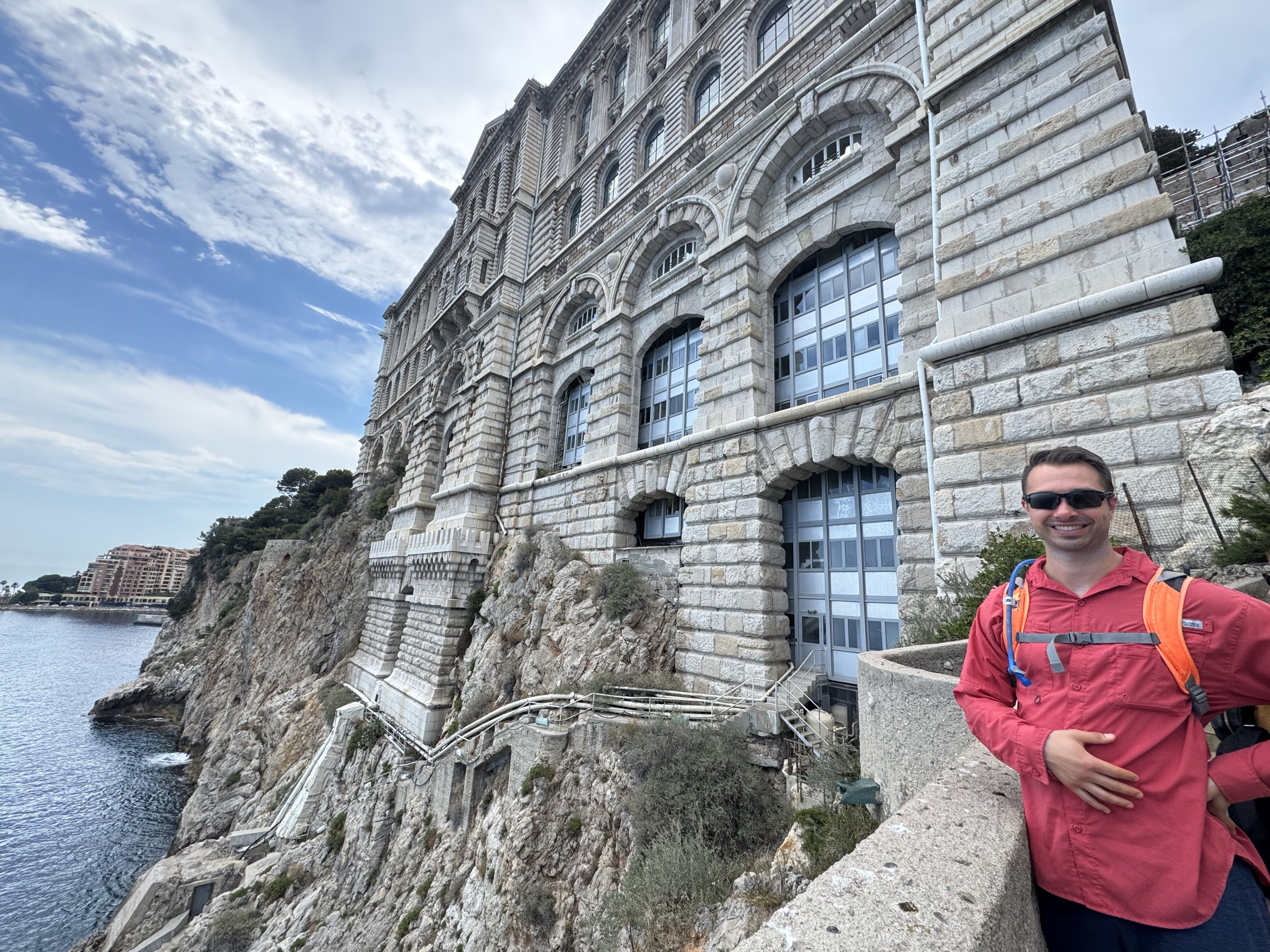
This past June I was in France for a friend's wedding, and I did what I do in any city with a few free hours: I went to the aquarium.
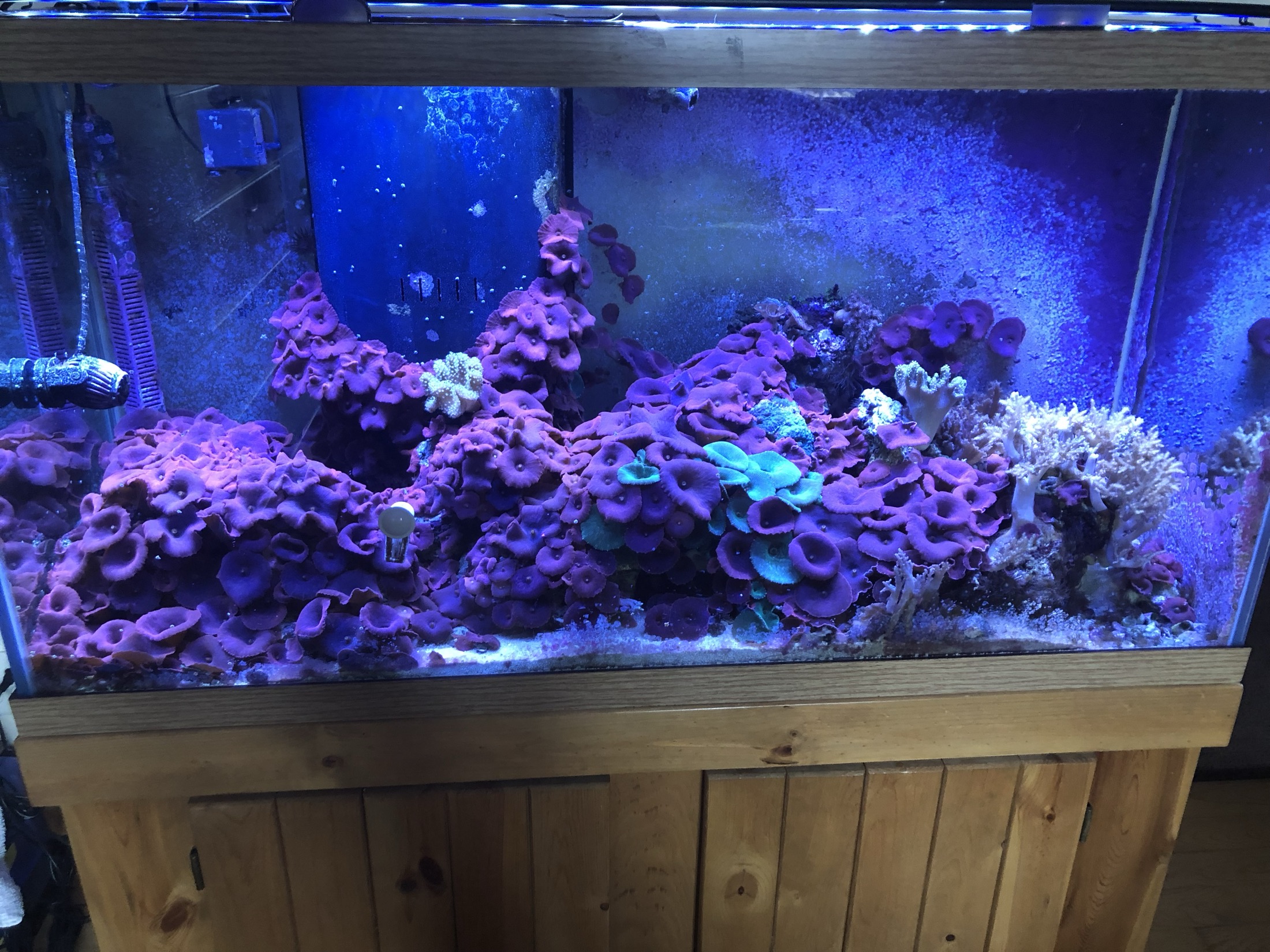
I have a saltwater aquarium of my own, which means I'm prone to arrange a trip around a fish exhibit. It also means I look at aquariums a little differently than most visitors. I am not just watching the animals but also inspecting the plumbing, lighting, aquascape, and wondering about water chemistry and salinity.
The Building
The Musée Océanographique de Monaco is worth seeing even if you are not an ichthyophile. It's built directly into the cliff face below the old town, rising above the Mediterranean. Approaching it from the coastal path, I got the sense it was a fortress that happened to contain fish. While the livestock at the aquarium in Monaco could not compete with the Georgia Aquarium or the Shedd, the Monaco aquarium had a number of unique exhibits well worth the visit.
Solitude
Aquariums are among the rare public places that can be crowded yet peaceful. The light is low; the sound of pumping water is melodic, and there is nothing to do but observe. It's an environment that naturally lends itself to introspection.
Big Things Come in Small Packages
Most people come to visit the large, flashy exhibits containing sharks, rays, the enormous reef displays with a thousand fish moving at once. While they are spectacular, the side exhibits often house many gems.
Seahorse displays are particularly tranquil. Given their docile nature, they are usually housed in a single species only tank. Often, you have to hunt around to find the little critters as they blend into the plants they clutch. Another species-only tank worth investigating is the Jellyfish exhibit. Jellyfish are weak swimmers and are easily damaged by conventional aquarium flow and intakes. Therefore, kreisel tanks use gentle circular current and screened outlets to keep them suspended and away from drains and corners. The result looks like a lava lamp and is in fact a fairly clever engineering problem.
Cuttlefish deserve attention for their intelligence and master camouflage. They change color almost instantly and can alter their skin texture in under a second. Unlike most denizens in an aquarium, a cuttlefish seems to actually look back at you.
Only a true hobbyist can appropriately appreciate a coral frag display. Coral fragments are cut small and mounted on plugs, grown out for propagation. It is a process I've run in my own tank, and seeing it done well at scale is the aquarium equivalent of admiring someone's woodworking.
The Sea Trash Tank
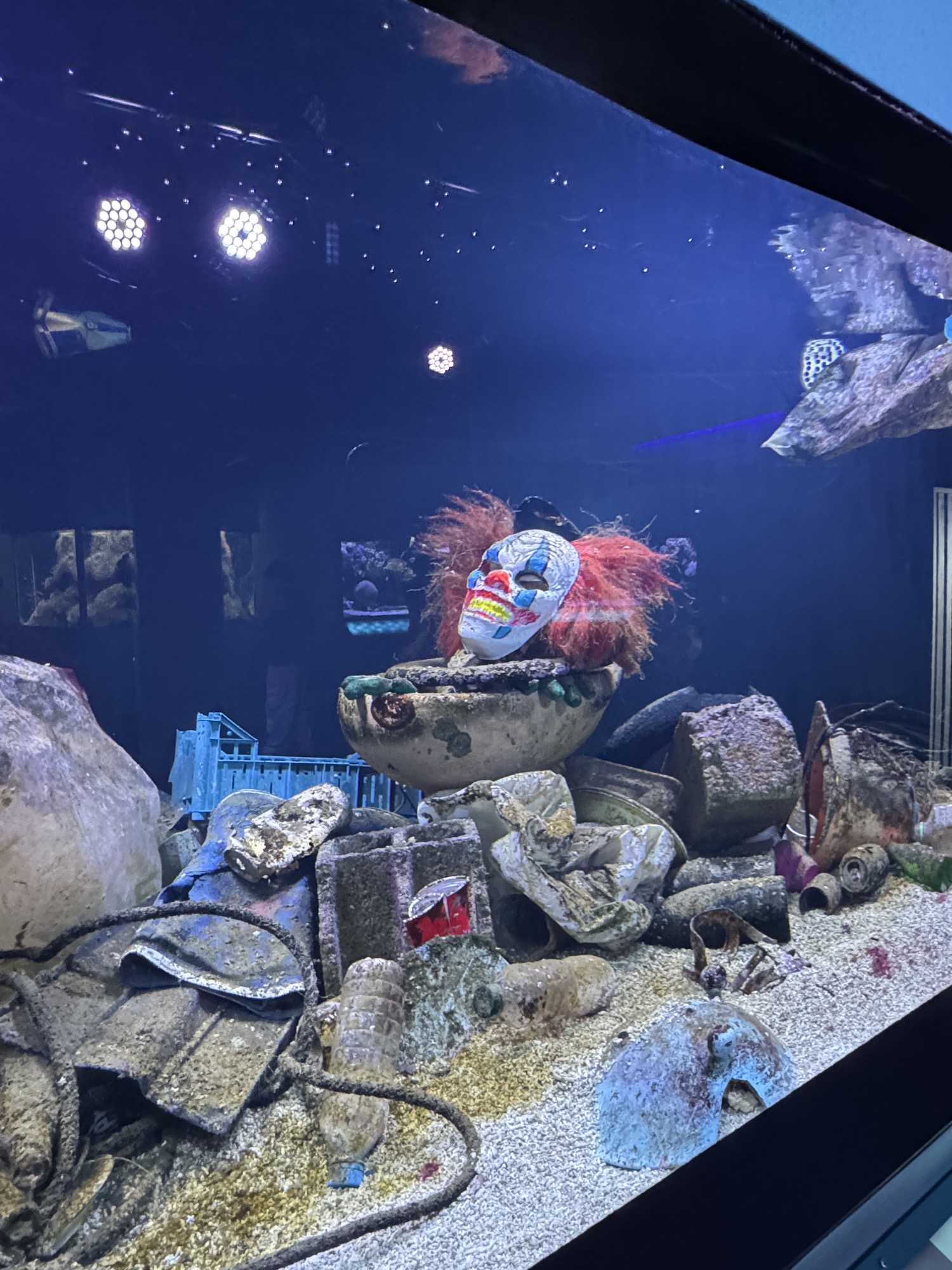
The exhibit I had not seen anywhere before was a tank of garbage, not just a display about garbage. An actual marine tank where the entire hardscape was recovered debris: life jackets, cinder blocks, bottles, cans, rope, a milk crate, and a rubber clown mask propped up in a discarded sink. The point lands harder than a placard possibly could. It is grim and striking with a clown mask that will haunt.
Scaly Origins
Here is where dermatology collides with amateur reef-keeping. The word ichthyosis comes from the Greek ichthys, meaning fish. It is the name given to a group of disorders in which normal cornification of the outer skin is disrupted, producing persistent scale. The resemblance is close enough that the name has stuck for centuries.
The common end of the disease spectrum is ichthyosis vulgaris, which affects roughly 1 in 100 to 250 people and is caused by loss-of-function mutations in filaggrin, a protein the skin needs to build a competent barrier. Most people with it have dry, scaly skin on the shins, fine lines on the palms, and often eczema.
X-linked ichthyosis comes from a deficiency of the enzyme steroid sulfatase and affects almost exclusively males. The autosomal recessive congenital ichthyoses are rarer still, on the order of 1 in 200,000 births, and include congenital ichthyosiform erythroderma and harlequin ichthyosis.
The field of dermatology is moving away from the term "ichthyosis" and towards the mechanistically correct term "epidermal differentiation disorder." As the term ichthyosis fades away, I can still appreciate the beauty of the marine life that inspired the physicians who originally coined the descriptor for these varied skin conditions.
Disclaimer: This article is general educational content, not medical advice. If you have a skin concern, see a board-certified dermatologist for evaluation.