
Sunday Gulch is one of the more interesting medium-length hikes in the Black Hills. The trail begins at Sylvan Lake in Custer State Park and drops down into a narrow granite canyon below the lake's spillway. It is a roughly four-mile loop that takes you past boulder fields, small stream crossings, and stretches where the path threads between near-vertical rock walls. In several of the steeper sections, the trail is equipped with metal handrails and short cable runs to help with footing on the wet granite.
The Trail
What makes Sunday Gulch worth the trip is the scale of the rock. The granite walls are tall, polished by water, and close enough in places that the trail feels more like a slot than an open path. There are a few sections where you scramble down rock steps with the rail in one hand, and short stretches where you walk along the stream itself. It is not a long hike, but it is a varied one, and on a warm afternoon the canyon is noticeably cooler than the rim above.
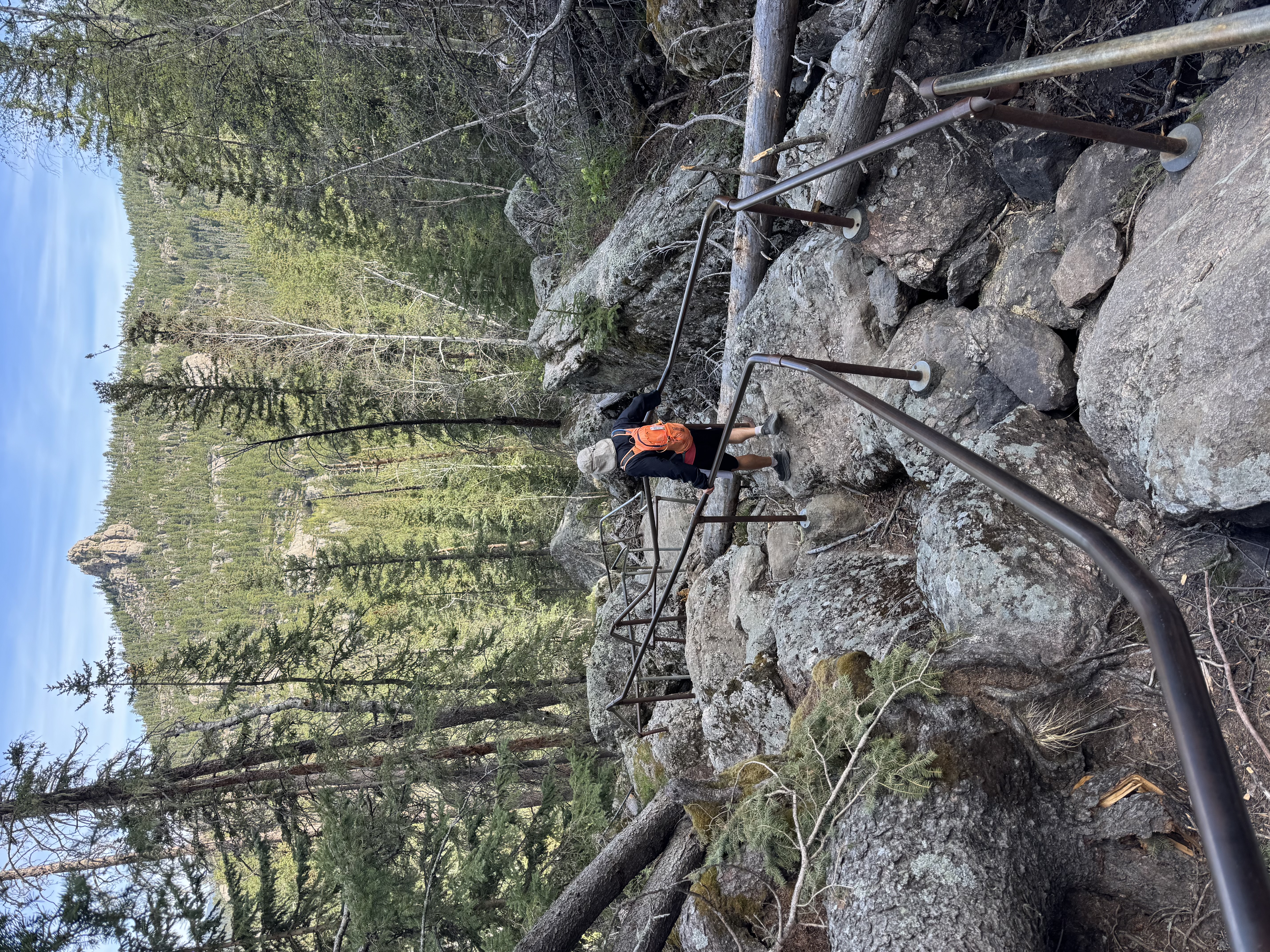
Hand to Handrail — A Question of Nickel
On the way down, holding onto one of those rails, it struck me that this is a useful place to talk about nickel.
Nickel is one of the most common causes of allergic contact dermatitis worldwide and is the most common contact allergen identified in many patch-tested populations. The mechanism is a Type IV delayed hypersensitivity reaction, similar in broad category to rhus dermatitis from poison ivy, poison oak, or poison sumac. In someone who is sensitized, re-exposure can cause a red, itchy, eczematous rash, sometimes with swelling or small blisters, often appearing within 24 to 72 hours after contact.
What surprises many people is that "metal" and "nickel-containing" are not the same thing, and even "nickel-containing" and "nickel-releasing" are not the same thing. Whether an object actually causes a rash depends less on how much nickel is present in the alloy and more on how much nickel migrates out of the surface and onto the skin.
Which Alloys Actually Cause Problems
Many modern architectural rails are made from stainless steel. Common low-sulfur stainless steels, such as 304 or 316/316L, may contain meaningful amounts of nickel, but they generally release very little because the alloy remains corrosion-resistant at the surface. If the Sunday Gulch rails are typical low-release stainless steel, brief contact during a hike would be much less likely to trigger nickel dermatitis than prolonged contact with high-release jewelry, belt hardware, snaps, or watch backs.
The picture changes considerably with other materials. High-sulfur stainless steel, which is easier to machine and sometimes used for fasteners and inexpensive hardware, can release enough nickel to cause skin reactions. Nickel-plated metal is an even more common problem. Much inexpensive "silver-tone" hardware is nickel-plated or contains a nickel-releasing base metal under a thin decorative finish that wears down over time.
Where Nickel Hides in Everyday Life
The most common real-world sources of nickel dermatitis are usually not handrails or stainless flatware. They are items in prolonged contact with skin, especially sweaty or irritated skin:
- Costume jewelry. This is the classic offender. Inexpensive earrings, necklaces, and rings may contain nickel or nickel-plated components under a thin gold- or silver-colored finish. Pierced earrings are especially high-risk.
- White gold. White gold may contain nickel, especially older or lower-cost alloys. Some white gold is rhodium-plated to brighten the surface, but the rhodium can wear off over months to years, exposing the underlying alloy. People are sometimes surprised that a wedding band or engagement ring is the culprit.
- Sterling silver. Standard sterling silver is 92.5% silver and is usually alloyed mostly with copper, so it is often tolerated. But not every "silver-tone" item is sterling silver, and terms like "nickel silver" or "German silver" do not mean nickel-free. A true nickel allergy warrants checking with the maker.
- Belt buckles, snaps, bra clasps, watch backs, eyeglass frames, and zippers. Anything metal that rides against the skin under clothing for hours is on the list. The lower abdomen rash from a jeans button or belt buckle is one of the classic presentations in dermatology.
Lower-risk options for people with confirmed nickel allergy include 24-karat gold, platinum, titanium, plastic, and appropriately low-release surgical stainless steel. No material label is perfect, so the practical question is not just what the item contains, but whether it releases nickel during real use.
The Dimethylglyoxime Test
When a person is sensitized to nickel and trying to figure out which item in their life is the culprit, a useful tool is the dimethylglyoxime, or DMG, spot test. A drop of DMG solution is applied to the object with a cotton swab. If nickel is being released from the surface, the swab turns pink to red.
The test is fast, cheap, and easy to do at home. It is not perfect. Studies generally show that the DMG test has high specificity, meaning a positive result is usually meaningful, but only modest sensitivity, meaning it can miss some nickel-releasing items. As a rule of thumb: a positive DMG result identifies a source to avoid, but a negative result does not fully clear the item, especially if you consistently react to it.
Consumer DMG test kits are inexpensive and available online — one option is linked here.
Managing It
The mainstay of treatment for nickel allergic contact dermatitis is the same as for most allergic contact dermatitis: identify and remove the source. For active flares, a topical corticosteroid and emollient are often enough. Widespread, persistent, or recurrent rashes may warrant evaluation by a dermatologist for patch testing to confirm the diagnosis and look for other relevant allergens.
Sensitization, once established, is generally long-lasting and often lifelong. The good news is that the rash itself is usually controllable when the relevant exposures are identified and avoided.
Sunday Gulch is a great trail, and the rails are doing exactly what they are supposed to do. For someone with a known nickel allergy, the handrail on a Black Hills hike is probably not worth worrying about. The earrings you put on for dinner afterward, on the other hand, might be.
Reference: DermNet. Nickel allergy. Accessed June 2026.
Affiliate disclosure: the Amazon link in this article includes my associate tag, which means I may earn a small commission if you purchase through it, at no extra cost to you.