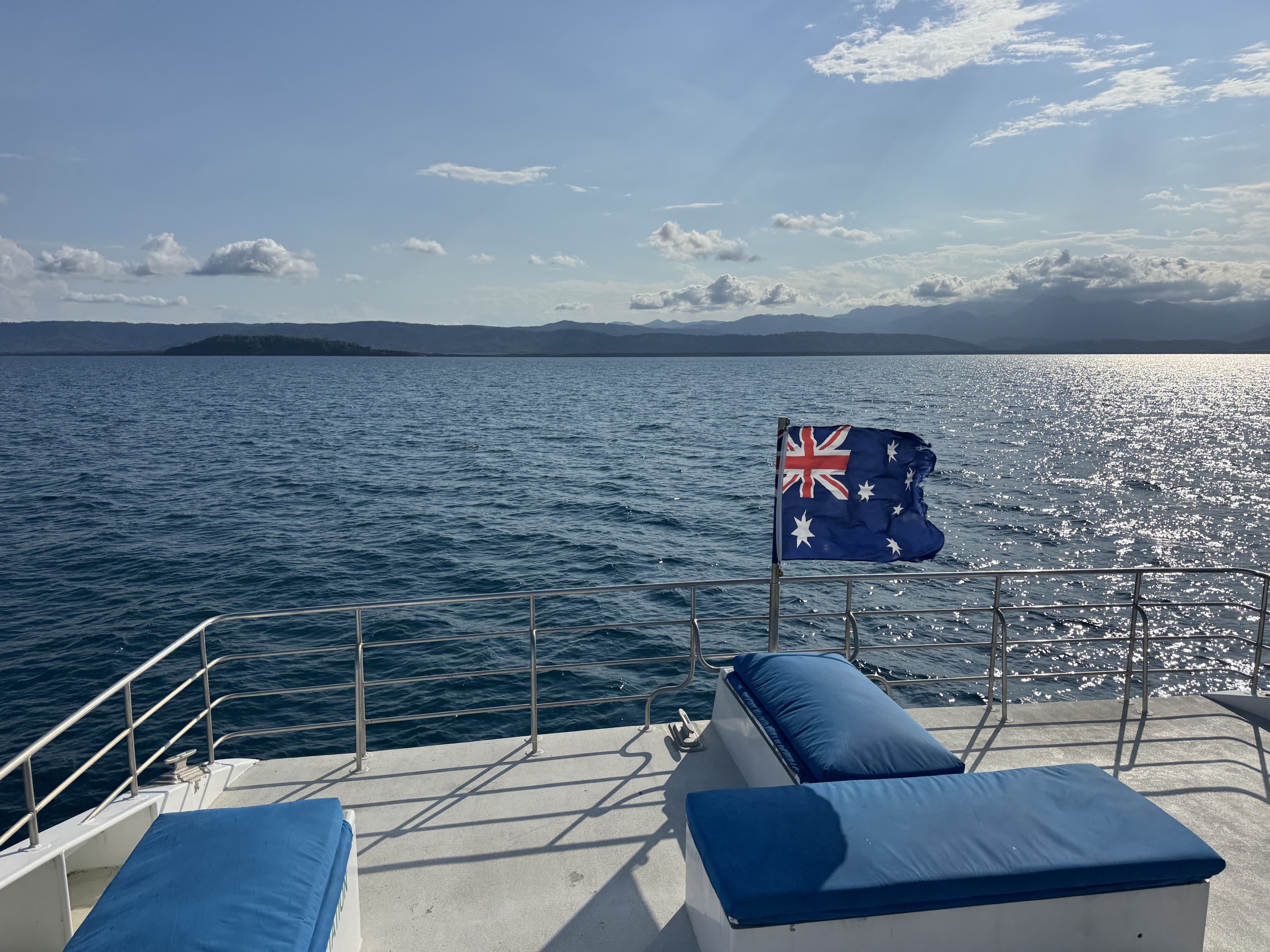
It sits at an odd intersection for me. I recommend sunscreen every day at my job, and I keep coral alive as a hobby. A headline claiming the first destroys the second gets my attention.
The Hazard
The paper that launched this conversation was published by Downs and colleagues in 2015. They exposed coral larvae to oxybenzone in light and in darkness and reported concentration-dependent toxicity and phototoxicity: bleaching, DNA damage, deformity, abnormal skeletal development, death.
Their work directly inspired legislation: Hawaii and the US Virgin Islands banned sunscreens containing oxybenzone and octinoxate. Key West passed a ban as well, which Florida later overrode with a state law preempting local sunscreen bans.
The Criticisms
A 2025 review of sunscreen regulation and safety in the Journal of the American Academy of Dermatology (JAAD) laid out some of the pitfalls in the Downs study. Their work used larvae, which may be more susceptible than adult colonies. There are no standardized toxicity testing protocols for coral, which makes comparison across studies difficult. And the oxybenzone water concentrations the paper reported were orders of magnitude larger than what similar studies have measured. When the authors sampled water in Hawaii and the US Virgin Islands, only the Virgin Islands concentrations overlapped with the levels that killed coral larvae in their own experiments.
The Concentration Gap
A 2021 critical review pulled together the UV filter (sunscreen) measurements taken near reefs. Most sat in the nanogram-per-liter range. Most of the published toxicity effects occur from micrograms to milligrams per liter. Though it sounds small, the gap between nanogram and milligram is orders of magnitude.
Sampling around Oahu found oxybenzone below 10 nanograms per liter (ng/L) at 12 of 19 sites. The highest readings, off Waikiki, ran roughly 11 to 136 ng/L. UV filters were detectable in seawater, in sediments, and in coral tissue, so exposure is genuinely happening. But at most sites the water concentrations sat far below the levels that appear to produce harm.
Where It Gets More Interesting
The picture is not simply that concentrations are too low and therefore nothing happens.
A 2022 study in Science proposed a mechanism. Corals and sea anemones take up oxybenzone and convert it into glucoside conjugates. Those metabolites become potent photo-oxidants in sunlight. The animal turns a sunscreen ingredient into something that damages itself. Interestingly, the algae symbionts that live within coral appear to sequester the conjugates to help prevent harm.
However, coral bleached by heat loses its symbiotic algae, and the protection they may provide. Some studies suggest that heat plus UV chemicals are more harmful than either alone. This is a two-hit model, and it suggests warming may increase whatever risk UV filters pose.
In 2023 a marine heatwave hit Little Cayman. At peak heat stress, roughly 80% of surveyed corals were bleached or dying, and by the final survey about 54% were dead. These are fairly isolated, heavily protected reefs. Clearly bleaching has been documented on remote reefs with minimal tourist activity. There is no credible analysis assigning a meaningful share of global coral loss to sunscreen.
Is “Reef Safe” Safe for Reefs?
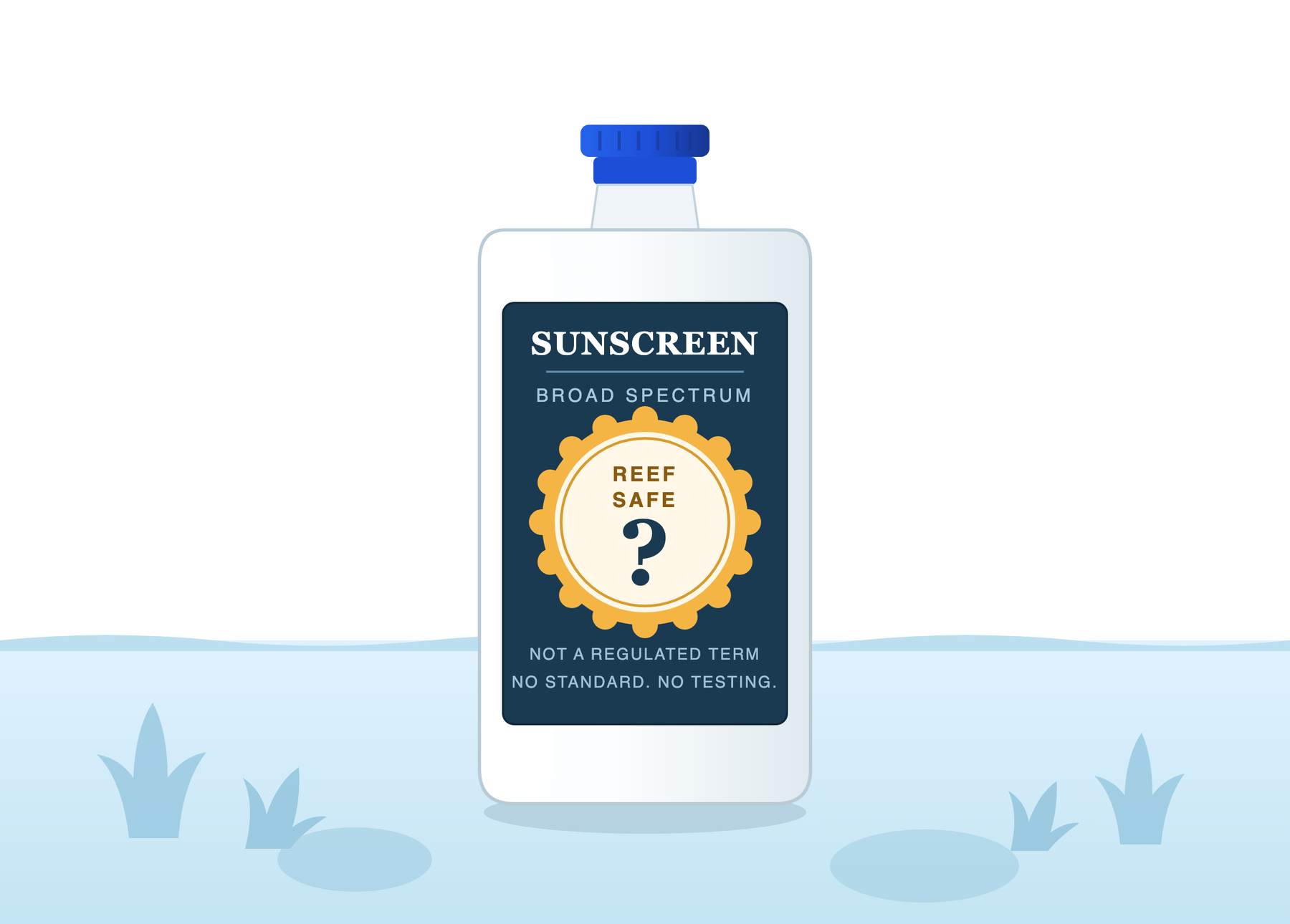
“Reef safe” is not a regulated term. There is no standard behind it, no required testing, and no agency certifying it. One analysis found that 4% of products carrying the label did not meet the relevant legislative ingredient restrictions, and close to half did not meet the environmental criteria NOAA (National Oceanic and Atmospheric Administration) used. They also tended to cost more than products without the label.
A 2025 study tested three commercial products all marketed as reef-safe or coral-friendly. One zinc oxide mineral product caused severe damage to coral while a product built on supposedly “unsafe” organic filters caused little or no injury. Again, the exposure concentrations were very high relative to what would be expected when swimming. In that case, the words on the bottle did not predict which product damaged coral.
Uncoated zinc oxide and titanium dioxide nanoparticles can bleach coral by generating reactive oxygen species and releasing metal ions. Fortunately, uncoated nanoparticles are not routinely used in sunscreens, real-world concentrations are very low (parts per billion), and the particles tend to settle into sediment rather than stay in the water column. The 2025 JAAD review concludes that concern from mineral filters is low, though not proven harmless.
Formulation seems to matter as much as the type of sunscreen. Free zinc oxide can cause oxidative stress in coral polyps while some tested finished formulations containing zinc oxide did not, possibly because the formulation limited how much zinc ion leached out. Additionally, the quantity that washes off varies with the vehicle as many formulations release under 10% of the applied UV filter.
Testing formulations under realistic conditions provides the most useful information. Without that we have to rely on individual ingredient toxicology and formulation to speculate on sunscreens’ effects. Importantly, the phrase printed on the label seems not to matter.
Where the Energy Belongs
Reefs are damaged for a variety of reasons, many unglamorous.
Nutrient pollution increases bleaching susceptibility, and nitrogen enrichment has been found to roughly double bleaching severity under some heat-stress conditions. Overfishing removes the herbivores that keep macroalgae down. Lots of macroalgae suppress coral recruitment, which helps explain why a reef fails to recover after a bleaching event. A three-year field experiment in the Florida Keys found that nutrients and overfishing together more than doubled coral disease and increased mortality as much as eightfold, with the effects amplified during warm periods. What’s more, sedimentation from coastal development impairs photosynthesis, growth, and recruitment.
Then there is everything else we put in the ocean, which is a considerably longer list than a few types of sunscreen. A narrow focus on sunscreens diverts attention from the principal and more difficult drivers of coral bleaching. There are areas of life where assuming guilty until proven innocent makes sense. However, given what else is going into the water (and at massive quantities), broad sunscreen restrictions are unlikely to impact reef decline in a meaningful way.
Practical Sunscreen Approach
Keep using sunscreen. Nothing in the literature changes the case for photoprotection and reducing skin cancer risk.
If you are swimming in a shallow bay or lagoon that holds water rather than exchanging it, then reducing chemical load may be reasonable. One way to do that is by wearing a full body rash guard with built-in UPF (ultraviolet protection factor) to block the sun’s rays. That way you only have to apply a smaller amount of sunscreen to exposed skin.
At the end of the day, whether or not coral reefs exist in fifty years will not come down to which sunscreen you wore on vacation.
Disclaimer: This article is general educational content, not medical advice. For questions about sun protection or a skin concern, see a board-certified dermatologist.
References
Abdel Azim S, Bainvoll L, Vecerek N, DeLeo VA, Adler BL. Sunscreens part 2: regulation and safety. J Am Acad Dermatol. 2025;92(4):689–698.
Downs CA, Kramarsky-Winter E, Segal R, et al. Toxicopathological effects of the sunscreen UV filter, oxybenzone (benzophenone-3), on coral planulae and cultured primary cells and its environmental contamination in Hawaii and the US Virgin Islands. Arch Environ Contam Toxicol. 2016;70(2):265–288 (published online 2015).
Mitchelmore CL, Burns EE, Conway A, Heyes A, Davies IA. A critical review of organic ultraviolet filter exposure, hazard, and risk to corals. Environ Toxicol Chem. 2021;40(4):967–988.
Vuckovic D, Tinoco AI, Ling L, Renicke C, Pringle JR, Mitch WA. Conversion of oxybenzone sunscreen to phototoxic glucoside conjugates by sea anemones and corals. Science. 2022;376(6593):644–648.
National Academies of Sciences, Engineering, and Medicine. Review of Fate, Exposure, and Effects of Sunscreens in Aquatic Environments and Implications for Sunscreen Usage and Human Health. 2022.
Zaneveld JR, Burkepile DE, Shantz AA, et al. Overfishing and nutrient pollution interact with temperature to disrupt coral reefs down to microbial scales. Nat Commun. 2016;7:11833.
Doherty ML, Johnson JV, Goodbody-Gringley G. Widespread coral bleaching and mass mortality during the 2023–2024 marine heatwave in Little Cayman. PLoS One. 2025;20(5):e0322636.
Rücker J, Leonhardt J, Wild C. Effects of three sunscreens on the ecophysiology of hard and soft corals from the Maldives. Mar Pollut Bull. 2025;219.